
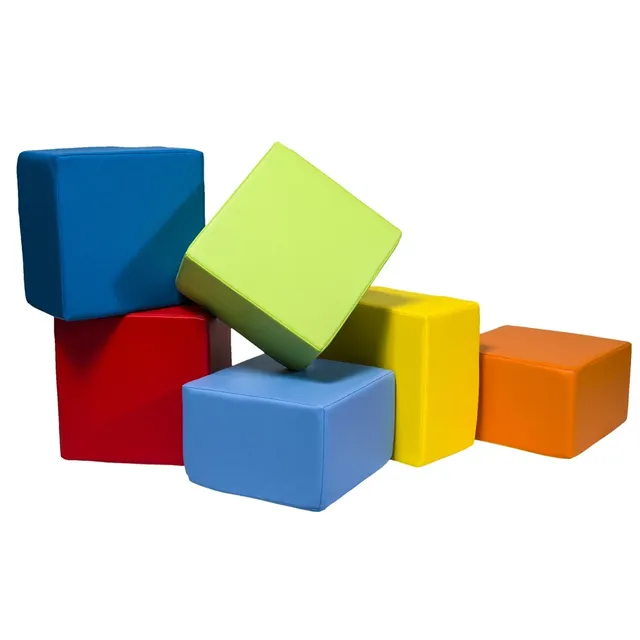
Giant Building Blocks are an excellent choice for children who enjoy creative play without the noise and excitement often associated with active indoor games. These oversized construction pieces encourage children to build, design, sort, and imagine at their own pace. Giant Building Blocks can turn a living room, classroom, playroom, daycare, or activity center into a calm creative space. For parents and educators looking for screen-free entertainment, Giant Building Blocks offer a practical way to support concentration, imagination, and independent play while keeping children comfortably engaged.
Why Giant Building Blocks Are Ideal for Quiet Play
Quiet activities are valuable because children need opportunities to slow down, concentrate, and explore ideas without constant stimulation. Giant Building Blocks provide an open-ended activity where there is no single correct result. A child can construct a small house, tower, bridge, animal, vehicle, or imaginative structure.
Unlike electronic toys that may include sounds, lights, or repetitive instructions, these large construction blocks allow children to control the pace of their play. They can build carefully, take structures apart, and start again whenever they want.
Encouraging Focus and Concentration
Building requires children to think about balance, shape, size, and positioning. When a child places one block on another, they learn that careful movements can produce better results. Giant Building Blocks naturally encourage sustained attention because children become interested in seeing how their construction develops.
This type of focused play can be particularly useful during quiet periods such as afternoons, reading breaks, indoor recess, or independent activity sessions.
Supporting Independent Creativity
Open-ended toys give children freedom to make their own decisions. Instead of following a fixed sequence, children decide what they want to create and how they want to create it.
Giant Building Blocks support this independence by providing simple pieces that can be combined in countless ways. A child may begin by making a tower and eventually transform it into a castle or imaginary city. For more information about large building blocks for kids, explore their features, benefits, age suitability, and role in encouraging imaginative and educational play.
How Giant Building Blocks Create a Calm Indoor Environment
The physical design of an activity can have a major effect on the atmosphere of an indoor space. Giant Building Blocks are generally simple to handle, allowing children to concentrate on construction instead of complicated controls or instructions.
Soft or lightweight oversized blocks can also make building more comfortable for younger children. Depending on the material, children can move pieces around without needing the strength required for heavier traditional construction materials.
Low-Noise Construction Play
Quiet construction activities are especially useful when several children share one room. Giant Building Blocks do not require music, batteries, or loud mechanical components to remain interesting.
Children can communicate while building, but the activity itself can remain relatively peaceful. This makes large building pieces suitable for classrooms, libraries, daycare areas, waiting rooms, and home play spaces where maintaining a calm atmosphere is important.
Flexible Play for Different Ages
One advantage of oversized construction toys is their flexibility. Younger children may focus on stacking and arranging blocks, while older children can create more complex structures.
Giant Building Blocks can therefore grow with a child's developing abilities. As spatial reasoning and planning skills improve, children may experiment with symmetry, patterns, enclosed spaces, and larger architectural designs.
Educational Benefits of Giant Building Blocks
Quiet play does not mean passive play. Children can develop important cognitive and physical skills while working with construction toys.
Developing Spatial Awareness
Building helps children understand how objects relate to one another in physical space. They begin to recognize concepts such as above, below, beside, inside, outside, balance, width, and height.
Giant Building Blocks make these concepts easier to explore because their large size provides a clear physical representation of different shapes and structures.
Practicing Problem-Solving
A structure may fall because its base is too narrow or because a block is positioned incorrectly. Instead of simply giving up, children can identify the problem and try another solution.
This trial-and-error process teaches persistence. Children learn that mistakes are part of construction and that changing a strategy can lead to better results.
Improving Fine and Gross Motor Skills
Although oversized blocks are large, children still need to grip, carry, position, and stack them carefully. These actions encourage coordination and body awareness.
Giant Building Blocks can involve both fine motor control and larger physical movements, depending on the size and weight of each piece.
Creative Ideas for Quiet Block Activities
Parents and teachers can introduce simple challenges without turning calm play into a highly structured lesson. The goal is to provide inspiration while leaving children plenty of freedom.
Build a Miniature Home
Ask children to create a house using blocks. They can decide where the walls, doorway, windows, and rooms should go. Once the basic structure is complete, they can use imagination to create stories around it.
Create a Balanced Tower
Give children a simple challenge: build the tallest tower they can without making it fall. This encourages planning and careful placement while maintaining a quiet environment.
Design a Small City
Older children can use Giant Building Blocks to create buildings, roads, bridges, and public spaces. They can then explain how people might use their imaginary city.
Make Shapes and Patterns
Children can arrange blocks according to size, shape, or color. Pattern-building activities introduce early mathematical thinking while keeping the activity simple and peaceful.
Choosing the Right Giant Building Blocks
When selecting oversized construction toys, consider the children's age, the available space, and the intended use. Blocks should be appropriately sized and easy for children to handle.
Material and Safety
Look for durable materials with smooth surfaces and child-friendly construction. For younger children, lightweight or soft blocks can be more convenient. Always follow the manufacturer's recommended age range and supervision guidance.
Size and Storage
Large blocks require more storage space than conventional building pieces. Before purchasing, measure the available play area and determine where the blocks will be stored after use.
Giant Building Blocks with simple shapes can be particularly practical because children can stack or organize them efficiently when playtime ends.
Using Giant Building Blocks at Home and School
These construction toys can fit naturally into different routines. At home, parents can introduce them during quiet afternoons, rainy days, or screen-free periods. In educational environments, teachers can include building sessions during free-choice activities or indoor learning centers.
Giant Building Blocks can also support cooperative play. Two or more children can work together to design a structure, divide construction tasks, and discuss their ideas. This develops communication and teamwork without requiring a loud or competitive game.
For parents and educators seeking a reliable creative-play option, Giant Building Blocks combine imagination, learning, movement, and calm concentration in one flexible activity.
Frequently Asked Questions
1. Are Giant Building Blocks suitable for quiet indoor play?
Yes. Giant Building Blocks are well suited to calm indoor activities because children can build, arrange, and experiment without electronic sounds or complicated mechanisms.
2. What skills do children learn from Giant Building Blocks?
Children can develop spatial awareness, coordination, problem-solving, planning, creativity, concentration, and persistence through construction play.
3. Can younger children use oversized building blocks?
Many oversized blocks are designed for young children, but parents should always check the recommended age range, material, size, and safety information before use.
4. How can teachers use Giant Building Blocks in classrooms?
Teachers can use them for free-choice construction, STEM-inspired activities, pattern exercises, collaborative projects, storytelling, and spatial-learning challenges.
5. Are Giant Building Blocks better than electronic toys for quiet activities?
They can be a useful alternative when the goal is calm, screen-free creative play. Their open-ended nature allows children to control the activity and create structures according to their own imagination.
Conclusion
Giant Building Blocks offer a simple and engaging way to introduce quiet creativity into indoor environments. They encourage children to concentrate, experiment, solve problems, and express their imagination without relying on screens or noisy electronic features. From simple stacking exercises to elaborate imaginary cities, the possibilities are extensive. With the right materials, suitable storage, and age-appropriate supervision, Giant Building Blocks can become a valuable part of home, classroom, daycare, and activity-center play. For families and educators seeking a versatile construction activity, these oversized building pieces provide an enjoyable balance between learning, creativity, independence, and peaceful indoor entertainment.